
How Fire Alarm Installation Works in LA County
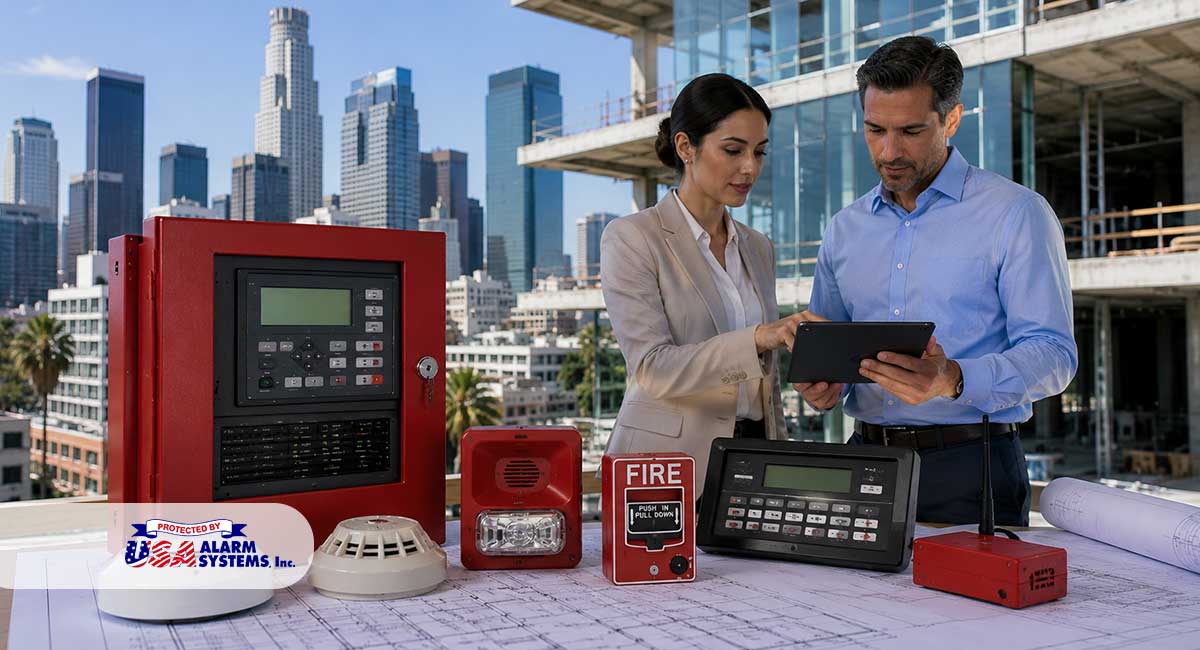
From design and permitting to installation, programming, testing, and AHJ approval — here's what goes into a code-compliant commercial fire alarm installation in Los Angeles.
Key Strategic Takeaways
Commercial fire alarm installations begin with proper planning—not equipment selection.
California fire codes and NFPA 72 establish strict installation requirements.
Every project should include system design, permitting, installation, testing, and AHJ approval.
Selecting scalable equipment allows your system to grow with your business.
Professional installation helps reduce delays, failed inspections, and costly rework.
Ongoing inspections and monitoring keep your investment compliant and reliable.
A commercial fire alarm system is one of the most important life safety investments a business can make. Yet many property owners don't realize how much planning goes into a successful installation before the first detector is ever mounted.
Unlike residential alarm systems, commercial fire alarm installations must account for occupancy classifications, building layouts, local fire codes, emergency communication requirements, and future expansion. A properly designed system protects lives, minimizes property damage, and helps businesses remain compliant with California regulations.
Whether you're constructing a new office building in Downtown Los Angeles, renovating a warehouse in Vernon, or completing a tenant improvement project in Pasadena, understanding the installation process can help your project stay on schedule and avoid costly surprises.
Every Successful Fire Alarm Installation Starts With Planning
The most successful commercial fire alarm projects begin long before technicians arrive on-site. Before equipment is specified, experienced fire alarm professionals evaluate several factors that influence how the system is designed and installed.
- Building occupancy classification
- Square footage
- Number of floors
- Existing fire protection systems
- Sprinkler system integration
- Elevator interfaces
- HVAC smoke control
- Emergency communication requirements
- Local fire department requirements
- Future tenant improvements
"The best fire alarm installations are the ones that feel uneventful. Careful planning during the design phase eliminates surprises during construction, helping projects stay on schedule and pass inspections the first time. — Sean Gunning, President, USA Alarm Systems"
Step 1: Fire Alarm System Design
Every commercial installation begins with a custom system design tailored to the building. Rather than simply selecting equipment from a catalog, designers determine detector placement, notification appliance locations, control panel capacity, power requirements, communication pathways, monitoring requirements, and future expansion capability.
The design process also considers architectural drawings, occupancy loads, ceiling heights, and special hazards unique to the facility. Modern addressable fire alarm systems provide greater flexibility than conventional systems, allowing every initiating device to report its individual location to the fire alarm control panel.
Step 2: Engineering and Permitting
Once the system design is complete, detailed engineering drawings are prepared for review. Depending on the project, these plans may require approval from local building departments, fire prevention bureaus, the Authority Having Jurisdiction (AHJ), project engineers, and general contractors.
Permitting helps verify that the proposed system complies with applicable codes before installation begins. Attempting to bypass this step can lead to expensive project delays and failed inspections.
Step 3: Professional Installation
With approved plans in place, installation begins. Experienced technicians carefully install each component according to engineered drawings and manufacturer specifications.
- Fire alarm control panel
- Smoke detectors
- Heat detectors
- Beam detectors (when required)
- Duct smoke detectors
- Manual pull stations
- Horn/strobes
- Voice evacuation speakers
- Annunciator panels
- Cellular/IP communicators
Proper cable routing, conduit installation, device spacing, and equipment labeling all contribute to a reliable and code-compliant system. Because commercial buildings often remain occupied during renovations, installation schedules are frequently coordinated to minimize disruption to daily operations.
Choosing Equipment That Can Grow With Your Business
One of the most common mistakes businesses make is selecting equipment based only on today's needs. A growing company may eventually add office space, warehouse expansions, new tenant suites, manufacturing areas, additional floors, access control integration, or mass notification capabilities.
Build for Tomorrow
Selecting a scalable addressable fire alarm platform today can significantly reduce future upgrade costs. The least expensive system isn't always the most economical—a platform that supports future expansion often delivers far greater long-term value than one that must be replaced after a building renovation.
Fire System Readiness Assessment
Review your facility's fire alarm readiness
This educational checklist does not replace a professional fire alarm inspection or determine code compliance. Requirements depend on your building, system and local authority.
Answer each statement about your facility:
Complete the checklist to review your answers.
Step 4: System Programming, Integration & Commissioning
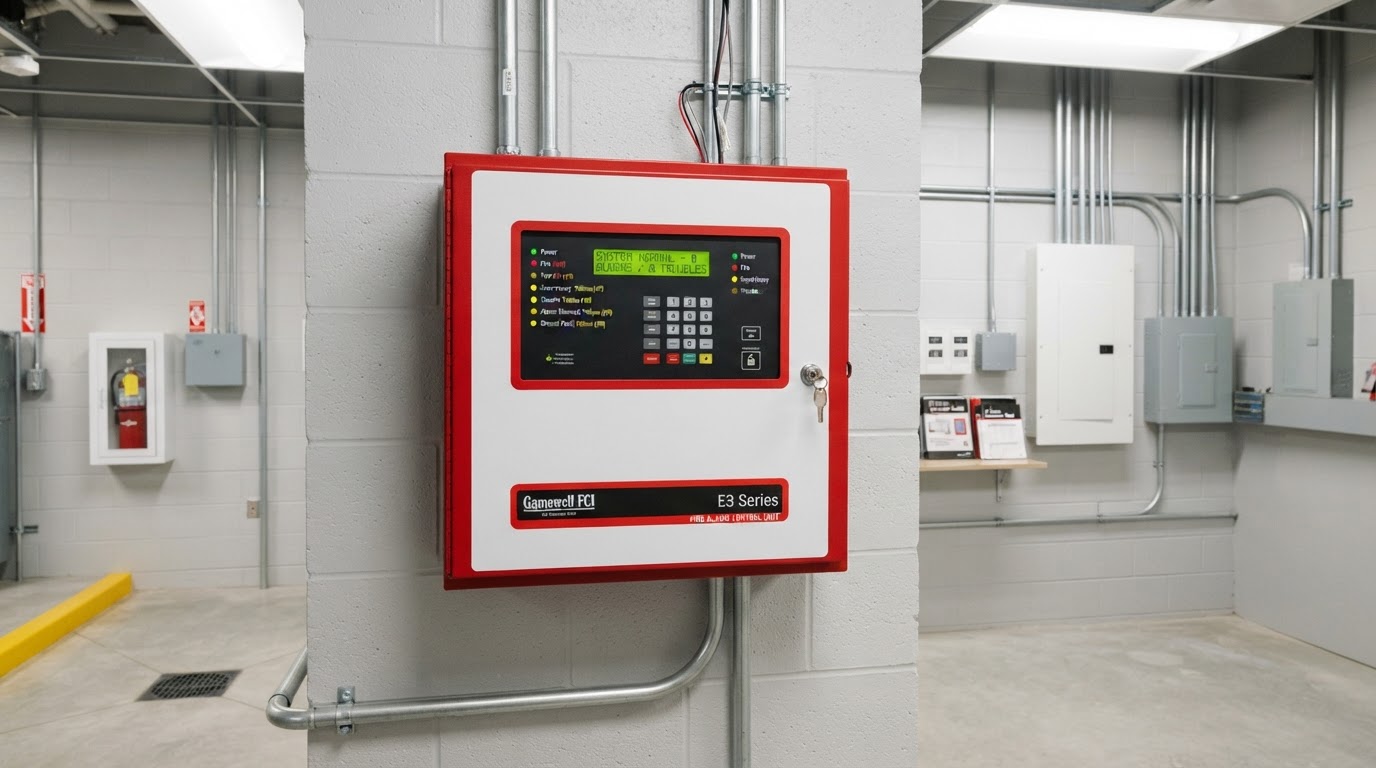
Once the hardware has been installed, the project moves into one of the most critical phases: programming and system commissioning. Unlike many commercial building systems, a fire alarm system must perform flawlessly during an emergency.
- Program the fire alarm control panel
- Assign addresses to intelligent devices
- Configure detection zones
- Verify notification sequences
- Test communication pathways
- Confirm battery backup operation
- Program supervisory and trouble conditions
- Verify sprinkler monitoring interfaces
- Test elevator recall (when applicable)
- Integrate voice evacuation systems if required
"Programming is where a fire alarm system truly comes to life. Even the best equipment won't perform as intended unless every device is properly configured, tested, and verified as part of the overall life safety strategy. — Sean Gunning, President, USA Alarm Systems"
Step 5: Acceptance Testing and AHJ Approval
Before a commercial fire alarm system can be placed into service, it must successfully complete acceptance testing, which verifies that the installed system performs exactly as shown on the approved construction documents. Representatives from the AHJ, fire marshal, building department, and fire alarm contractor may all participate.
During testing, technicians activate each initiating device individually while confirming that the correct detector reports to the panel, horns and strobes operate properly, elevator recall and HVAC shutdown activate when required, and signals transmit correctly to the central monitoring station. Only after the system successfully passes acceptance testing can it be placed into normal operation.
Professional Fire Alarm Monitoring Completes the System
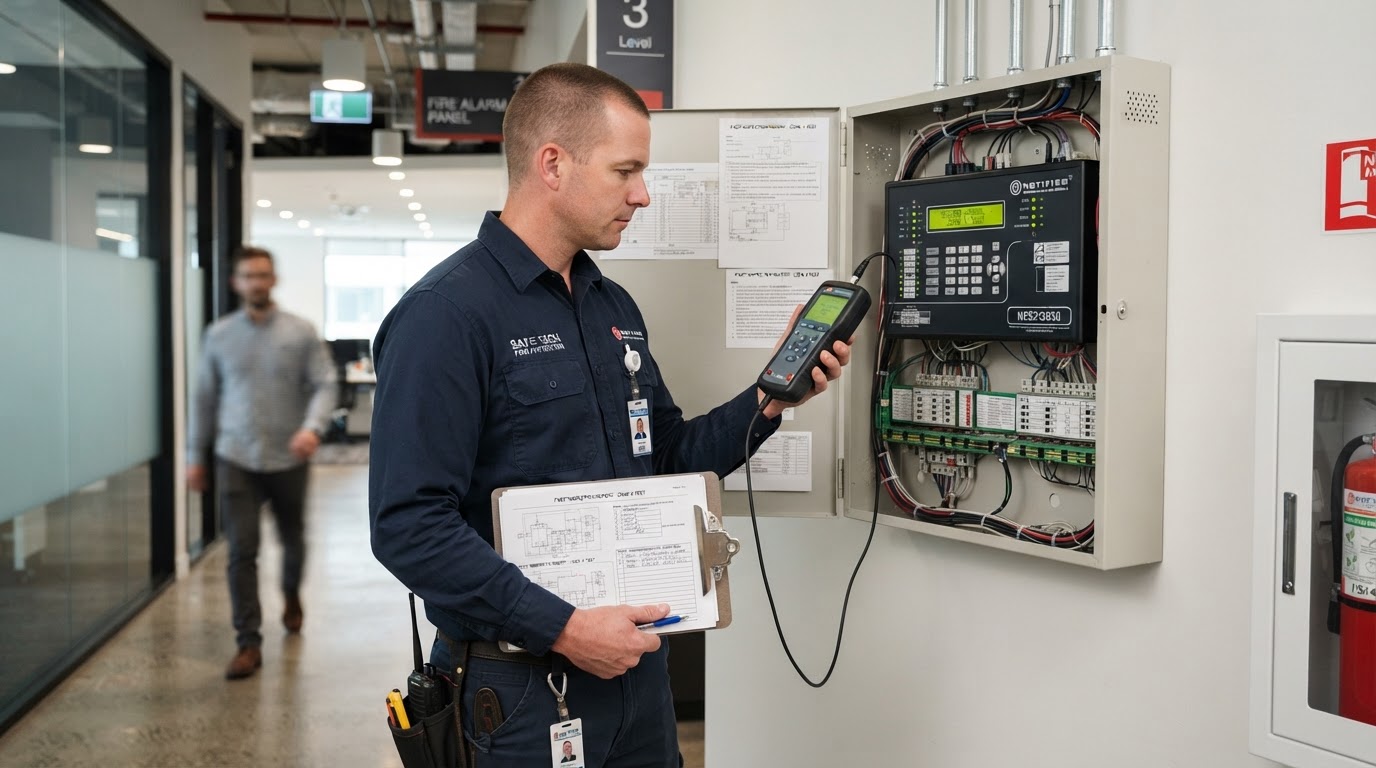
A properly installed fire alarm system becomes even more effective when paired with professional 24/7 monitoring. Should a fire occur after business hours, the system automatically transmits alarm signals through secure communication pathways to a UL-listed central monitoring station, where trained operators initiate emergency response procedures.
For many commercial occupancies, monitored fire alarm systems are not simply recommended—they are required. Monitoring also provides supervision of communication pathways, helping identify potential issues before an emergency occurs.
Integration Creates a Smarter Building
Today's commercial fire alarm systems often serve as the backbone of a broader life safety ecosystem. Proper integration can improve emergency response while simplifying facility management.
- Fire sprinkler monitoring
- Access control systems
- Emergency exit door release
- Elevator recall
- Smoke control systems
- HVAC shutdown
- Emergency voice evacuation
- Mass notification platforms
"The best commercial fire alarm installations aren't just code compliant—they're thoughtfully integrated. When fire alarms, sprinklers, access control, HVAC, and emergency communications work together, building owners gain a safer facility that's also easier to manage. — Sean Gunning, President, USA Alarm Systems"
Fire Alarm Installation Timeline
Every project is unique, and timelines depend on building size, occupancy, permitting, and construction schedules.
| Project Phase | Typical Duration |
|---|---|
| Site Survey & Consultation | 1–3 Days |
| System Design & Engineering | 1–3 Weeks |
| Permit Review & Approval | Varies by Jurisdiction |
| Equipment Procurement | 1–4 Weeks |
| System Installation | Several Days to Several Weeks |
| Programming & Commissioning | 1–5 Days |
| Acceptance Testing | 1 Day |
| Monitoring Activation | Same Day After Approval |
Common Fire Alarm Installation Mistakes
Even well-managed commercial projects can encounter avoidable delays. Early planning and experienced project management help eliminate many of these challenges.
- Waiting until construction is nearly complete to involve the fire alarm contractor
- Selecting equipment without considering future expansion
- Underestimating permitting timelines
- Failing to coordinate with other building trades
- Installing equipment that does not support current communication standards
- Neglecting future inspection and maintenance planning
- Choosing a contractor based solely on the lowest bid instead of long-term expertise
Commercial Fire Alarm Installation Checklist
Before beginning a commercial fire alarm installation, verify that you've completed the following steps:
- Determine occupancy classification
- Review California Fire Code requirements
- Coordinate with the Authority Having Jurisdiction
- Complete engineered system drawings
- Obtain required permits
- Select scalable equipment
- Plan for future tenant improvements
- Coordinate with electrical, HVAC, and sprinkler contractors
- Schedule acceptance testing
- Establish an ongoing inspection and maintenance program
When Should You Call a Professional?
If you're planning new construction, renovating an existing facility, changing your building occupancy, or replacing an aging fire alarm system, professional guidance should begin during the earliest stages of project planning. Early involvement often reduces project delays, minimizes change orders, and helps ensure the installation passes inspection the first time.
Why Choose USA Alarm Systems?
USA Alarm Systems helps Los Angeles businesses plan, install, monitor, inspect, and maintain commercial fire alarm systems built around their facility, occupancy, and code requirements.
- Local Los Angeles commercial fire alarm experience
- Professional system design and installation
- Fire alarm monitoring solutions
- Inspection and testing support
- Integrated fire, security, access control, and surveillance expertise
- Long-term service after installation
Commercial fire alarm installation is too important to leave to guesswork. From design and permitting to installation, programming, testing, monitoring, and ongoing service, every step matters. Contact USA Alarm Systems today for a complimentary consultation and customized commercial fire alarm installation plan for your Los Angeles business.
Frequently Asked Questions
Related Resources
 Commercial Security
What Is Live Video Monitoring for Businesses?
Learn how remote live video monitoring and AI analytics turn commercial security cameras into proactive crime prevention.
Read Intelligence Commercial Security
The Definitive Guide to Commercial Access Control Systems
Learn how commercial access control replaces physical keys with cloud management, mobile credentials, and video surveillance integration.
Read Intelligence Commercial Security
Security System Upgrades: When to Repair, Modernize, or Replace
Learn when to repair, selectively modernize, or completely replace an aging commercial security system to maximize performance and ROI.
Read Intelligence