
What Is Live Video Monitoring for Businesses?
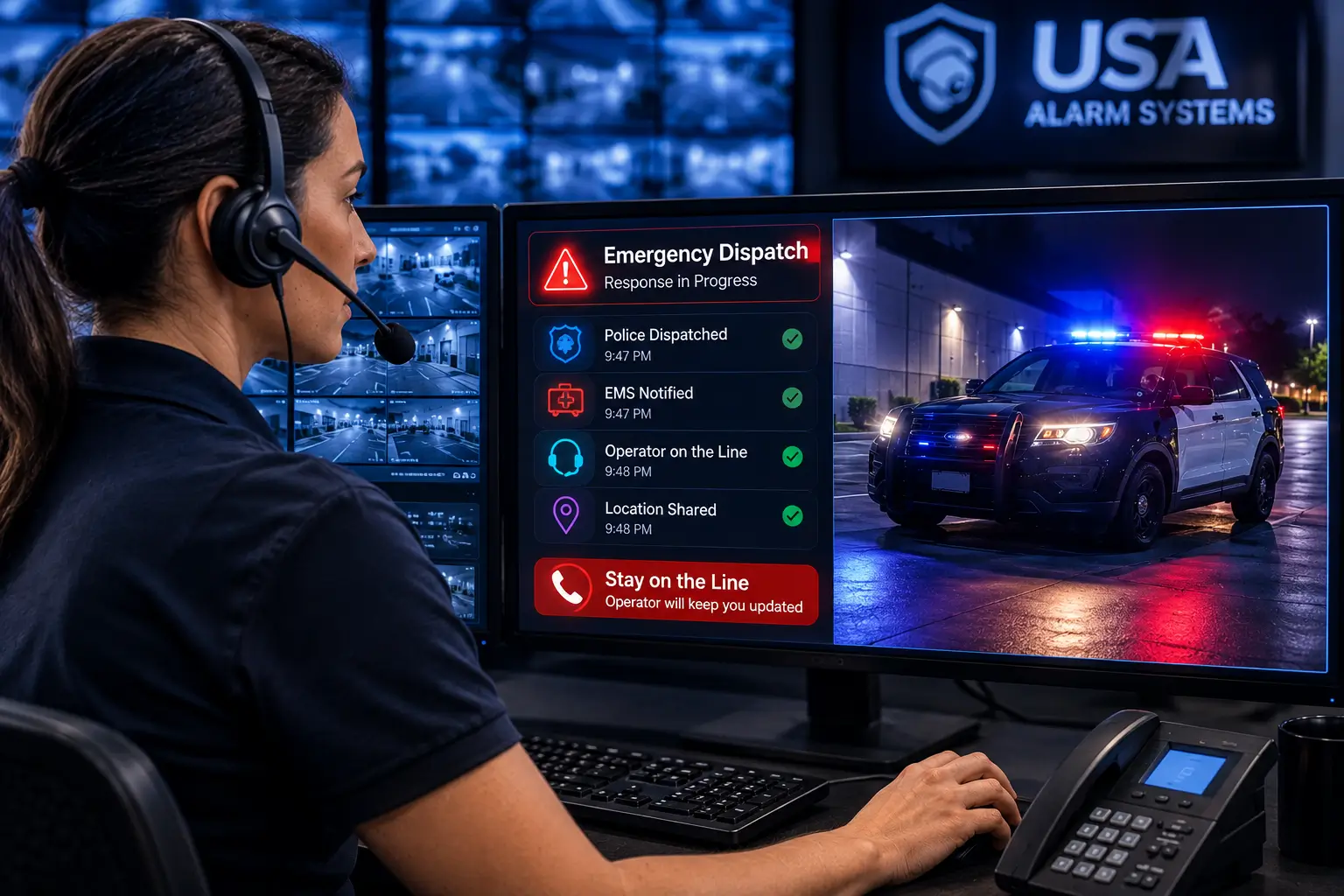
Learn how remote live video monitoring and AI analytics turn commercial security cameras into proactive crime prevention.
Key Strategic Takeaways
Live video monitoring combines cameras, analytics, trained operators, audio intervention, and rapid dispatch.
Active monitoring intervenes during suspicious activity before crime becomes a financial loss.
40-year crime prevention research shows active CCTV reduces crime by up to 37% in parking and commercial sites.
Video-verified alarms provide police dispatch with real-time situational evidence for higher priority response.
Remote audio warnings stop over 90% of intruders before damage or theft occurs.
What Is Live Video Monitoring?
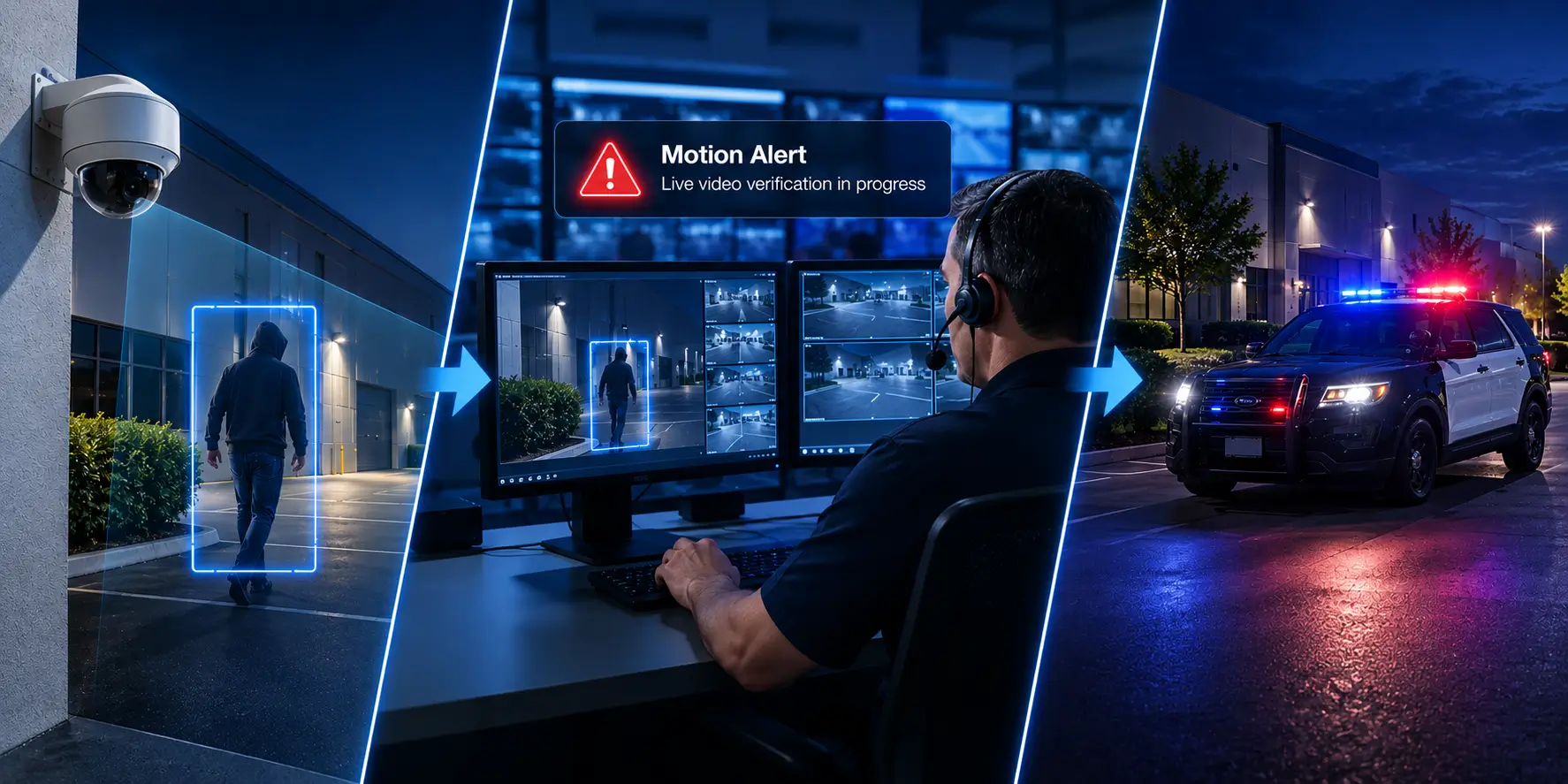
Live video monitoring—sometimes called remote video monitoring, proactive video monitoring, or virtual guarding—is a security service in which trained monitoring personnel can evaluate camera activity at a protected property and take action when suspicious behavior is detected.
The key word is action. Traditional CCTV typically records continuously or when motion occurs. Someone usually reviews the footage only after an incident.
Live video monitoring creates an active security workflow combining high-definition cameras, AI analytics, defined detection zones, professional operators, live audio speakers, and law enforcement notification.
"Traditional video surveillance asks, "What happened?" Live video monitoring is designed to ask a more valuable question: "What is happening right now, and can we do something about it?""
How Live Video Monitoring Works
1. Cameras Watch Defined Areas
Security cameras monitor strategic perimeters, equipment yards, loading docks, gates, rooftops, and storage areas.
2. Analytics Identify Relevant Activity
AI analytics distinguish between humans, vehicles, animals, and weather movement to reduce false alerts.
3. Operator Evaluates the Event
A trained operator receives live video verification within seconds to assess human intent and context.
4. Live Voice-Down Intervention
The operator broadcasts a live audio warning over outdoor loudspeakers advising the intruder police are dispatched.
5. Priority Law Enforcement Dispatch
Verified crime-in-progress details are transmitted directly to 911 dispatch for urgent emergency response.
Passive Cameras vs. Live Video Monitoring
| Capability | Recorded CCTV | Live Video Monitoring |
|---|---|---|
| Records incidents | Yes | Yes |
| Provides forensic evidence | Yes | Yes |
| Detects activity in real time | Sometimes | Yes |
| Human evaluation during incident | No | Yes |
| Live audio intervention | Usually no | Yes, equipped |
| Can verify suspicious activity | Limited | Yes |
| Can contact police during event | No automatic intervention | Yes, according to protocol |
| Tracks developing incident | No | Yes |
| Primarily reactive | Yes | No |
| Designed for proactive intervention | No | Yes |
Does Video Monitoring Actually Reduce Crime?
Independent crime-prevention research strongly supports actively monitored CCTV. A major 40-year systematic review and meta-analysis examined 76 evaluations and found CCTV was associated with a 13% overall reduction in crime, with effects reaching 37% in monitored parking facilities.
The College of Policing Findings
A separate College of Policing evidence review found that actively monitored CCTV produced a statistically significant 15% reduction in crime, whereas passive CCTV without active monitoring demonstrated no statistically significant crime reduction.
Security Guards vs. Live Video Monitoring
| Consideration | On-Site Security Guard | Live Video Monitoring |
|---|---|---|
| Visible presence | Excellent | Moderate (Signs & Speakers) |
| Physical intervention | Yes, within policy | No |
| Multiple simultaneous areas | Limited | Strong |
| Continuous electronic observation | Limited | Strong |
| Remote perimeter coverage | Limited by patrol route | Strong |
| Audio warning capability | Direct verbal contact | Remote loud speaker |
| Evidence recording | Requires body camera | Built in HD/Cloud |
| Scalability across large sites | Requires more personnel | Highly scalable |
Police Response Time Estimator
Compare response speeds based on video verification
Est. Police Response Time
~45 min
Lower priority = delayed emergency response
Why Live Audio Intervention Matters
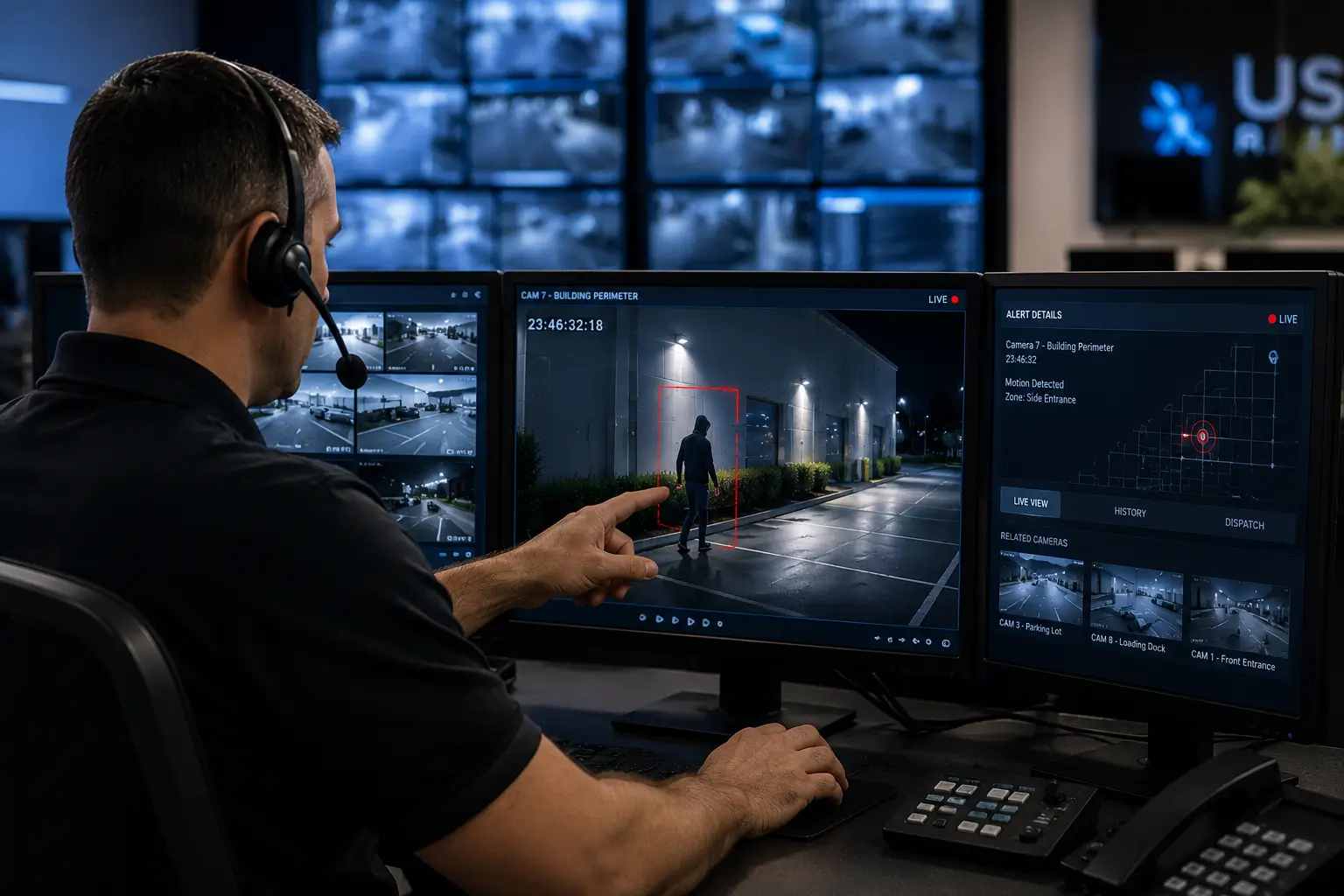
Detection alone does not necessarily stop an incident. When an operator identifies suspicious activity, an on-site loudspeaker allows live verbal warnings. Communicating that an individual is under live police surveillance converts an unnoticed intruder into a fleeing trespasser before property loss occurs.
Video Verification & Priority Police Response
Unverified burglar alarms historically have a 94% to 99% false alarm rate nationwide. Consequently, many police departments treat unverified alarms as low priority calls. Video verification provides dispatchers with real-time confirmation that unauthorized individuals are actively on-site, enabling priority dispatch.
Frequently Asked Questions
Related Resources
 Commercial Security
The Definitive Guide to Commercial Access Control Systems
Learn how commercial access control replaces physical keys with cloud management, mobile credentials, and video surveillance integration.
Read Intelligence Commercial Security
Security System Upgrades: When to Repair, Modernize, or Replace
Learn when to repair, selectively modernize, or completely replace an aging commercial security system to maximize performance and ROI.
Read Intelligence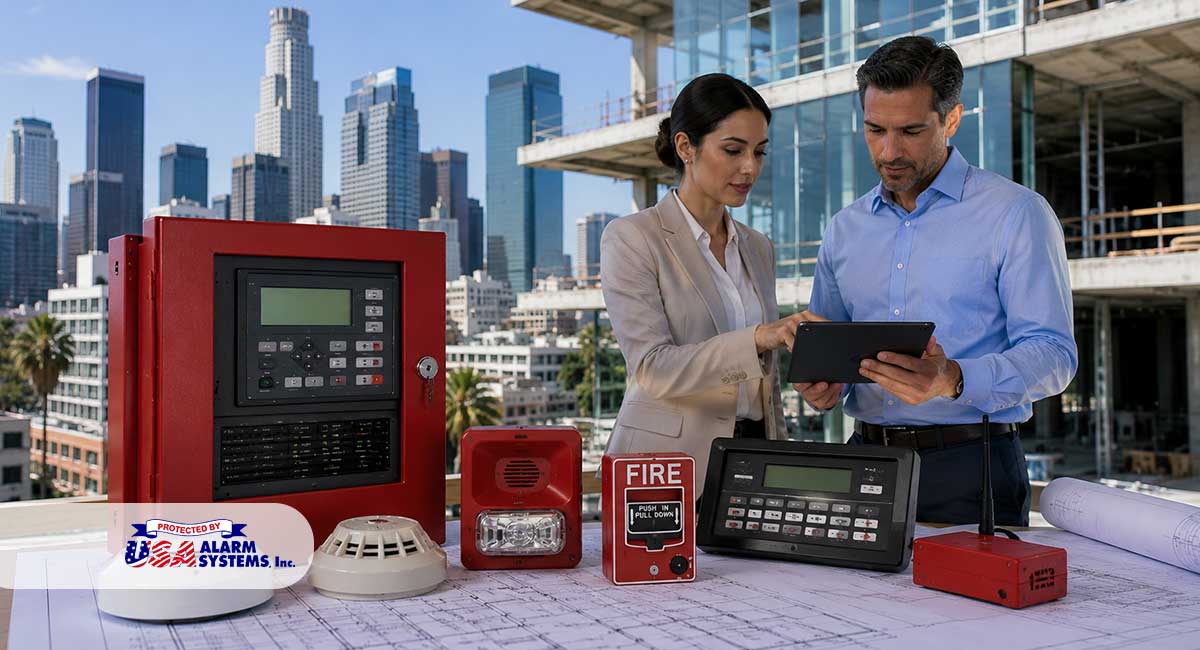 Fire & Life Safety
How Fire Alarm Installation Works in LA County
From design and permitting to installation, programming, testing, and AHJ approval — here's what goes into a code-compliant commercial fire alarm installation in Los Angeles.
Read Intelligence